The Hierophant
The Hierophant is about inherited knowledge — schools, mentors, traditions, the way things are done. It suggests a proven path or an experienced guide may serve you better right now than improvising alone.
KeywordsTradition, teaching, belief, institutions, mentor, rules, spirituality, learning
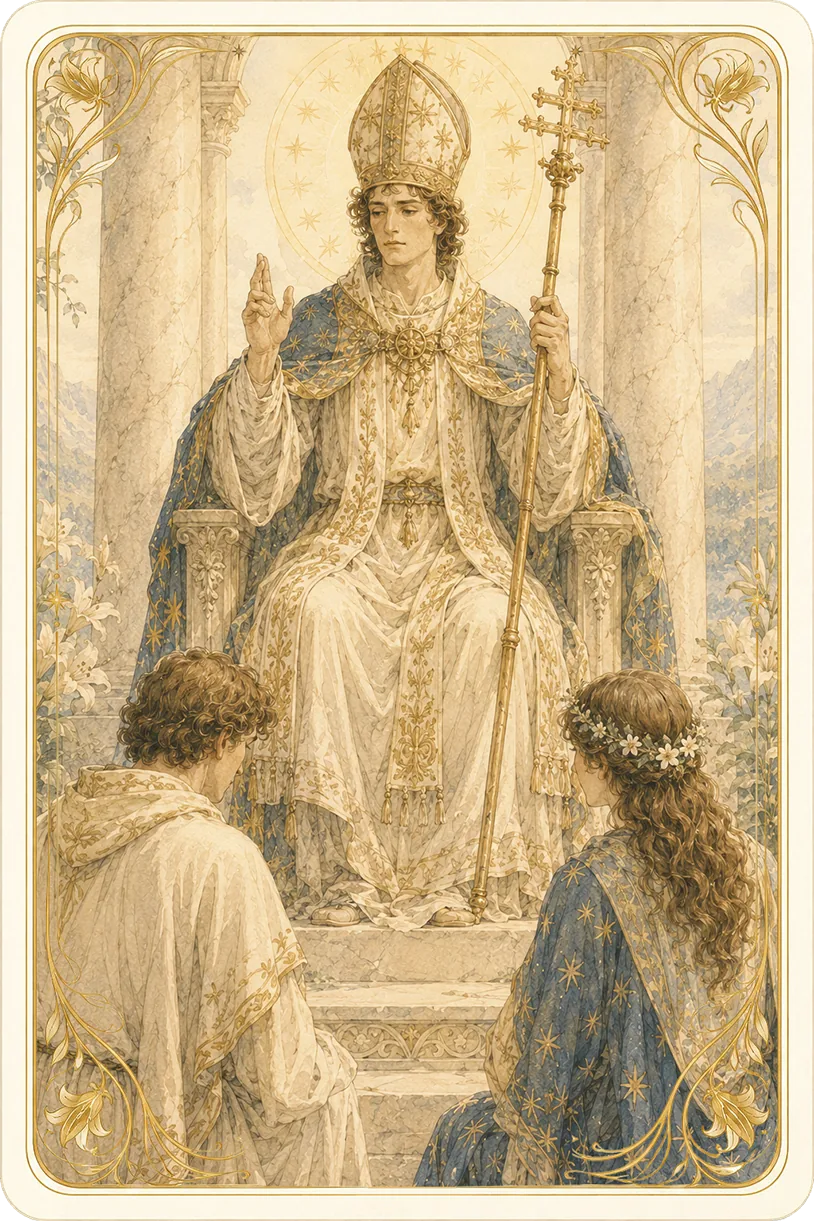
The Hierophant sits between two pillars with two acolytes kneeling before him, and he is the card of the thing somebody already worked out. Inherited knowledge — schools, mentors, traditions, the way things are done — and the suggestion that a proven path may serve you better right now than improvising alone.
Upright meaning
Here you are working inside an established system rather than around it. That might mean training, certification, joining an institution, or finding someone who has already done the thing you're attempting. Learning the standard form before departing from it tends to save time here. The card also covers formal commitments — marriage, contracts, ceremonies — anything where a private arrangement becomes publicly recognized. Belonging to something larger is part of the appeal.
Reversed meaning
Personal conviction and inherited rules have started to rub. A path you followed because it was expected may feel airless, or advice that once fit no longer describes your situation. Neither blanket rebellion nor unquestioned compliance resolves this. It helps to sort your principles into two piles: the ones still doing real work for you, and the ones you kept out of habit. What remains is worth defending.
Love & relationships
Commitment tends to take a visible form here — meeting family, moving in, naming the relationship out loud. It's also worth comparing the templates you each grew up with, since unspoken assumptions about how partnership works cause more friction later than any single disagreement does.
Work & money
Learning and belonging matter now. Training, credentials, and adapting to how your organization operates build the credibility that opens doors. With money, tested approaches suit this card better than novel ones — asking someone experienced before committing is a step worth keeping.
Advice
Stop solving it alone. Ask one person who has already walked this road a single specific question.
What the Hierophant card looks like, and why it matters
A robed figure sits on a throne between two grey pillars, wearing a triple crown and holding a triple-barred staff. One hand is raised in blessing. At his feet, two tonsured figures kneel; between them lie two crossed keys. The setting is indoors, stone, and built — every line of it is something a person made.
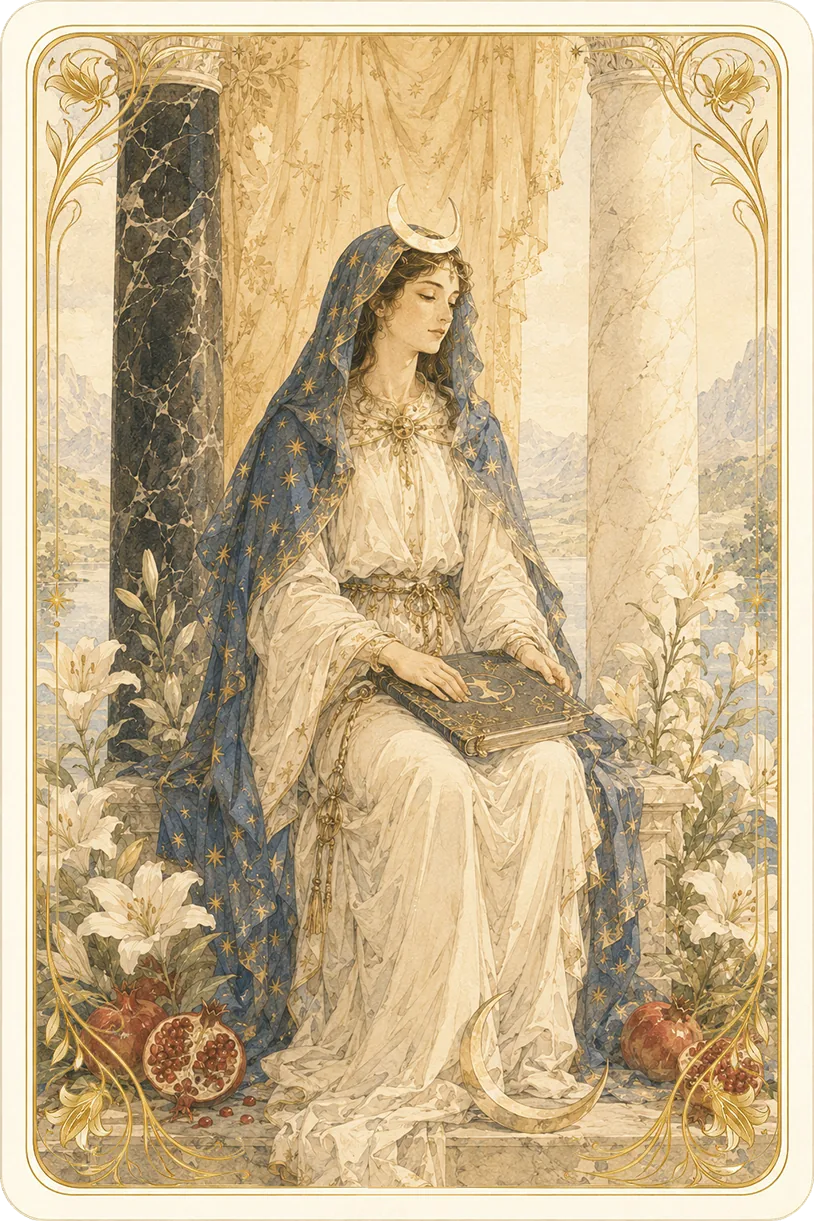
Where the High Priestess guards a threshold, the Hierophant stands inside the building and holds the keys to it. The two acolytes are the card's quiet argument: knowledge here is passed down, not discovered, and the kneeling is not submission but apprenticeship. The crossed keys say there is a way in, and that somebody already knows it. The Hierophant is not the card of obedience. It is the card of not having to reinvent what has been learned before you.
The Hierophant upright: meaning in a reading
Upright, you are working inside an established system rather than around it. That might mean training, certification, joining an institution, or finding someone who has already done the thing you are attempting. The card's practical claim is that learning the standard form before departing from it saves time — you can break a rule far better once you know why it was there.
The Hierophant also covers formal commitments: marriage, contracts, ceremonies, anything where a private arrangement becomes publicly recognised. Belonging to something larger than yourself is part of the card's appeal, and it does not apologise for that. In a reading it often points to a teacher, an advisor, or an institution whose help is available and underused because asking felt like admitting you could not do it alone.
The Hierophant reversed: what changes
Reversed, personal conviction and inherited rules have started to rub. A path you followed because it was expected may feel airless. Advice that once fit no longer describes your situation, and the institution that taught you is now the one in the way. The card is honest that neither blanket rebellion nor unquestioned compliance resolves this.
The useful move is to sort your principles into two piles: the ones still doing real work for you, and the ones you kept out of habit. What remains in the first pile is worth defending. What sits in the second can be put down without ceremony. The reversed Hierophant is not anti-tradition. It is the moment you find out which of your traditions were actually yours.
The Hierophant in love and relationships
In love, commitment tends to take a visible form here — meeting family, moving in, naming the relationship out loud, the conversation about what you each mean by the word partner. The Hierophant favours the step that makes a private thing public, and it suggests the step is closer than it feels.
It is also worth comparing the templates you each grew up with. Unspoken assumptions about how a partnership works — who apologises first, what a holiday looks like, whether money is shared — cause more friction later than any single disagreement does. If you are asking about someone specific, the card describes someone traditional in the better sense: someone for whom commitment is a thing you do, not only a thing you feel.
The Hierophant in work, career and money
At work, learning and belonging matter now. Training, credentials, and adapting to how your organisation actually operates build the credibility that opens doors. The Hierophant is a strong card for anyone weighing whether a qualification is worth the time: its answer is usually yes, because the qualification is also the room it lets you into.
With money, tested approaches suit this card better than novel ones. Asking someone experienced before committing is a step worth keeping, and the Hierophant's version of financial wisdom is unglamorous — the boring fund, the advice from the person who has done it for twenty years, the rule you follow because the people who broke it are not around to say how it went.
The Hierophant as a yes-or-no card
Asked yes or no, the Hierophant says yes — the conventional way. It is a yes to the established path, the formal step, the advice from someone who has been there. It is a slower yes, or a not-like-that, for the shortcut and the improvised version. If you are asking whether to make a commitment official, the card is encouraging. If you are asking whether you can skip the part where you learn the rules, it is not.
Frequently asked questions
What does the Hierophant card mean?
Inherited knowledge — schools, mentors, traditions, the way things are done — and the suggestion that a proven path or an experienced guide may serve you better right now than improvising alone. It also covers formal commitments, where a private arrangement becomes publicly recognised.
Is the Hierophant a good card?
Good for anyone willing to learn the standard form before departing from it, and for anyone weighing a formal step — a qualification, a commitment, a contract. It is less welcome if you wanted permission to go your own way, because the Hierophant's first suggestion is always to ask someone who has been there.
What does the Hierophant mean in love?
Commitment taking a visible form: meeting family, moving in, naming the relationship out loud. It also asks you to compare the templates you each grew up with, since unspoken assumptions about how partnership works cause more friction later than any single disagreement.
What does the Hierophant reversed mean?
Personal conviction rubbing against inherited rules — a path followed because it was expected that now feels airless. Neither rebellion nor compliance resolves it. The card asks you to sort your principles into the ones still doing real work for you and the ones kept out of habit, and to defend the first pile.
Does the Hierophant mean yes or no?
Yes, the conventional way. A yes to the established path, the formal step, the advice from someone who has been there; a slower yes or a not-like-that for the shortcut. If you are asking whether to make a commitment official, it encourages you.
Write your question and pick three cards from the full 78. The first reading works without signing up.
Cards worth reading alongside
Tarot does not fix the future. These pages are a reference for reflecting on where you are right now.