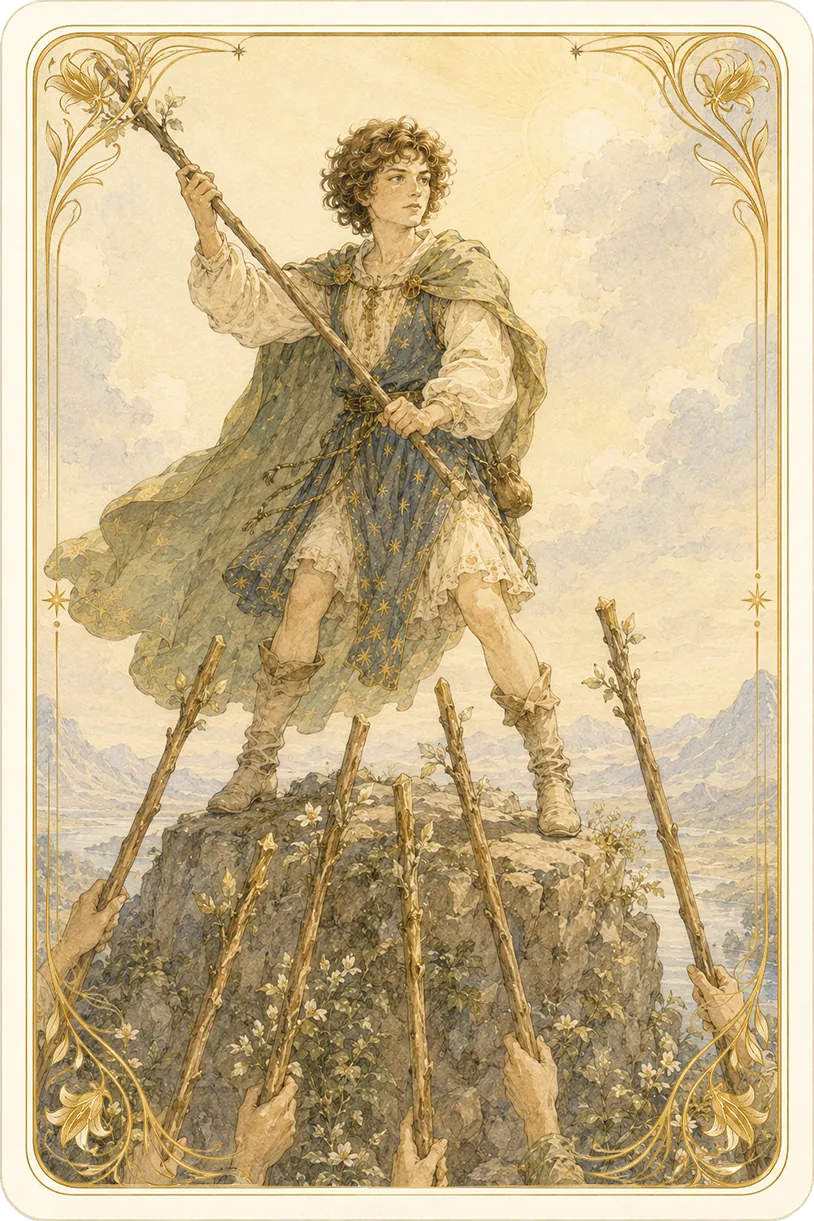
Seven of Wands
One figure holds high ground against six challengers below. The card describes the cost of having something worth defending — pressure arriving precisely because you built a position other people now want.
KeywordsDefense, challenge, standing ground, courage, competition, resistance, pressure, advantage
The Seven of Wands is one figure on high ground against six challengers below. It describes the cost of having something worth defending — pressure arriving precisely because you built a position that other people now want.
Upright meaning
You are being asked to hold a line: your role, your standard, your read on the situation. Challenges show up because you have something now, which is worth remembering when it feels purely hostile. The trap is answering everything. Meeting every objection with equal force drains the energy you need for the thing you actually care about. Decide in advance which points are negotiable, and the rest gets much lighter to carry.
Reversed meaning
Holding out has started to cost more than it returns. That can look like blurring your position to avoid another argument, or like reading ordinary questions as attacks because your guard has been up so long. What tends to help here is not a stronger defense but a second person. Letting someone else carry part of the load changes the shape of the problem entirely.
Love & relationships
You may find yourself explaining your relationship, or your standards inside it, to people who did not ask kindly. Outside comparison hardens things. Before arguing your case to anyone, say plainly — to yourself first — what it is you are actually protecting.
Work & money
Your territory is being questioned and you are expected to justify it. It can feel like doubt about your competence; more often it signals that your position became worth contesting. Documentation and numbers argue better than frustration does.
Advice
Do not answer every objection. Pick the one thing you will not trade away, and defend that.
What the Seven of Wands shows, and why every detail matters
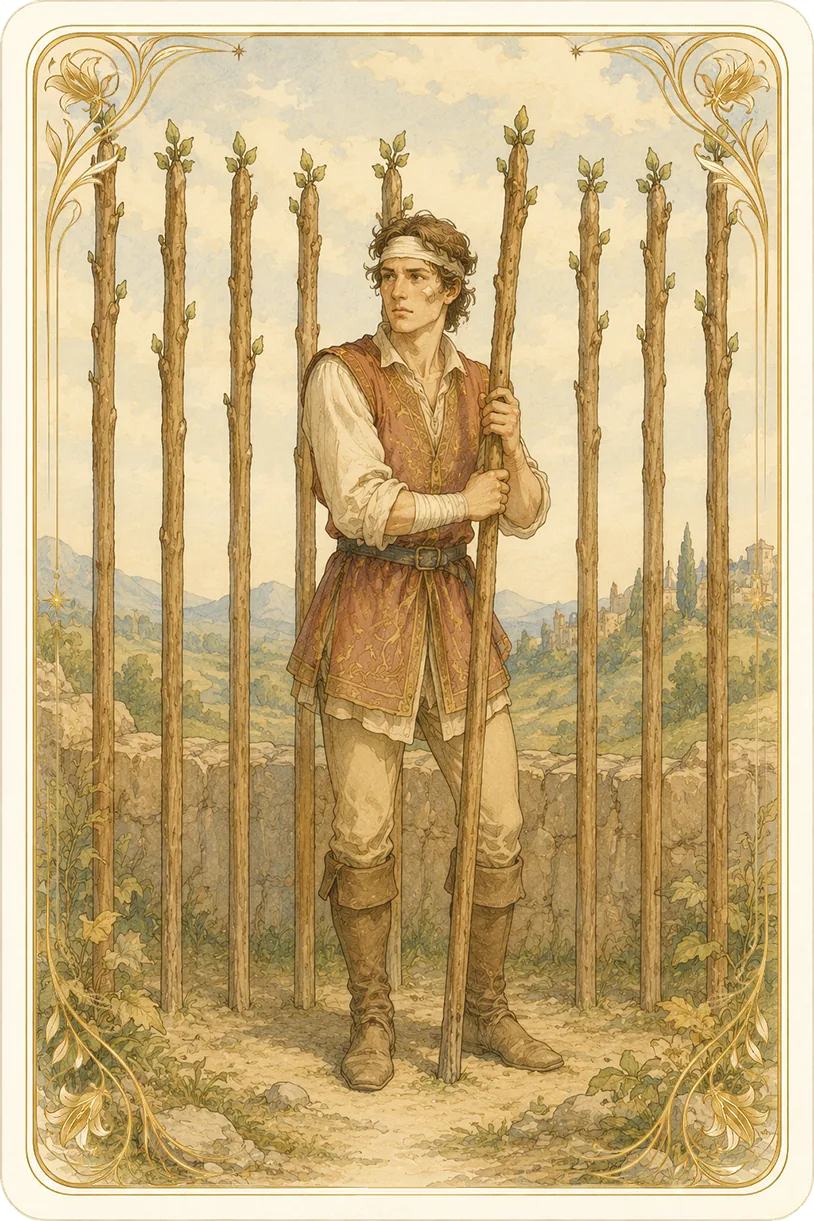
A figure stands on a rise, gripping a wand with both hands, leaning into it. From below, six more wands rise toward them, held by hands we cannot see. The figure's footing is uneven — one boot, one shoe, in the traditional image — and their expression is set rather than frightened. The sky behind them is clear.
Three things in the picture carry the meaning. The figure is above, which means they got there first and hold the advantage. The attackers are faceless, which means the card is not about a particular enemy but about the fact of being contested. And the mismatched footwear says the defender is not perfectly prepared — nobody ever is — and is holding the line anyway. The Seven of Wands is not a card of being attacked. It is a card of having something worth attacking.
The Seven of Wands upright: meaning in a reading
Upright, you are being asked to hold a line: your role, your standard, your read on the situation. Challenges are showing up because you have something now, and the card asks you to remember that when it feels purely hostile. A position nobody wanted would not need defending.
The trap is answering everything. Meeting every objection with equal force drains the energy you need for the thing you actually care about, and the six wands below are counting on exactly that. The card's practical advice is to decide in advance which points are negotiable — and the rest becomes much lighter to carry, because you are no longer fighting on six fronts but one.
The Seven of Wands reversed: what changes
Reversed, holding out has started to cost more than it returns. That can look like blurring your position to avoid another argument, giving ground you did not mean to give because you were tired of the conversation. Or it looks like the opposite: reading ordinary questions as attacks because your guard has been up for so long that you have forgotten how to lower it.
What tends to help here is not a stronger defence but a second person. Letting someone else carry part of the load changes the shape of the problem entirely — a line held by two is not the same line. The reversed Seven of Wands asks who you have not told, and why the defending has been yours alone.
The Seven of Wands in love and relationships
In love, you may find yourself explaining your relationship, or your standards inside it, to people who did not ask kindly — family with opinions, friends with comparisons, the running commentary that attaches itself to any choice someone else would not have made. Outside comparison hardens things, and the card knows it.
Before arguing your case to anyone, say plainly — to yourself first — what it is you are actually protecting. If you are asking about someone specific, the Seven of Wands suggests the two of you are under some pressure from outside, and that the pressure is a sign the thing is real enough to be noticed. It does not say the critics are wrong. It says you get to decide which of them you answer.
The Seven of Wands in work, career and money
At work, your territory is being questioned and you are expected to justify it. A decision you made is being relitigated; a role you hold is being eyed. It can feel like doubt about your competence. More often it signals that your position became worth contesting, which is a different and better problem than being ignored.
Documentation and numbers argue better than frustration does. The card favours the person who can show their work calmly over the one who defends it loudly. With money, the Seven of Wands is the card of holding a position you believe in through a stretch where everyone is telling you to sell — not stubbornness, but a decision made in advance and kept.
The Seven of Wands as a yes-or-no card
Asked yes or no, the Seven of Wands says yes — if you hold. It is a yes for anything you are prepared to defend and a no for anything you would abandon at the first objection. If the question is whether your position will survive, the card says it will if you stop trying to win every point. If the question is whether it will be easy, the six wands say no, and the figure on the rise already knew that.
Frequently asked questions
What does the Seven of Wands mean?
The cost of having something worth defending. Pressure arrives because you built a position other people now want — a role, a standard, a read on the situation. The card asks you to hold the line without answering every objection: decide in advance what is negotiable, and the rest gets lighter to carry.
Is the Seven of Wands a good card?
It is a strong card rather than a comfortable one. It says you have something worth contesting, which is a better problem than being ignored, and it favours the person who can defend their position calmly. It is less welcome if you were hoping the pressure would simply stop; the card says it stops when you stop fighting on six fronts.
What does the Seven of Wands mean in love?
Explaining your relationship, or your standards in it, to people who did not ask kindly. Outside comparison hardens things. The card asks you to say plainly — to yourself first — what you are actually protecting, and reminds you that pressure from outside is often a sign the thing is real enough to be noticed.
What does the Seven of Wands reversed mean?
Holding out has started to cost more than it returns — blurring your position to avoid another argument, or reading ordinary questions as attacks because your guard has been up so long. The remedy is not a stronger defence but a second person; a line held by two is a different line.
Does the Seven of Wands mean yes or no?
Yes, if you hold. A yes for anything you are prepared to defend, a no for anything you would drop at the first objection. If you are asking whether your position will survive, it will if you stop trying to win every point. If you are asking whether it will be easy, it will not.
Write your question and pick three cards from the full 78. The first reading works without signing up.
Cards worth reading alongside

Tarot does not fix the future. These pages are a reference for reflecting on where you are right now.