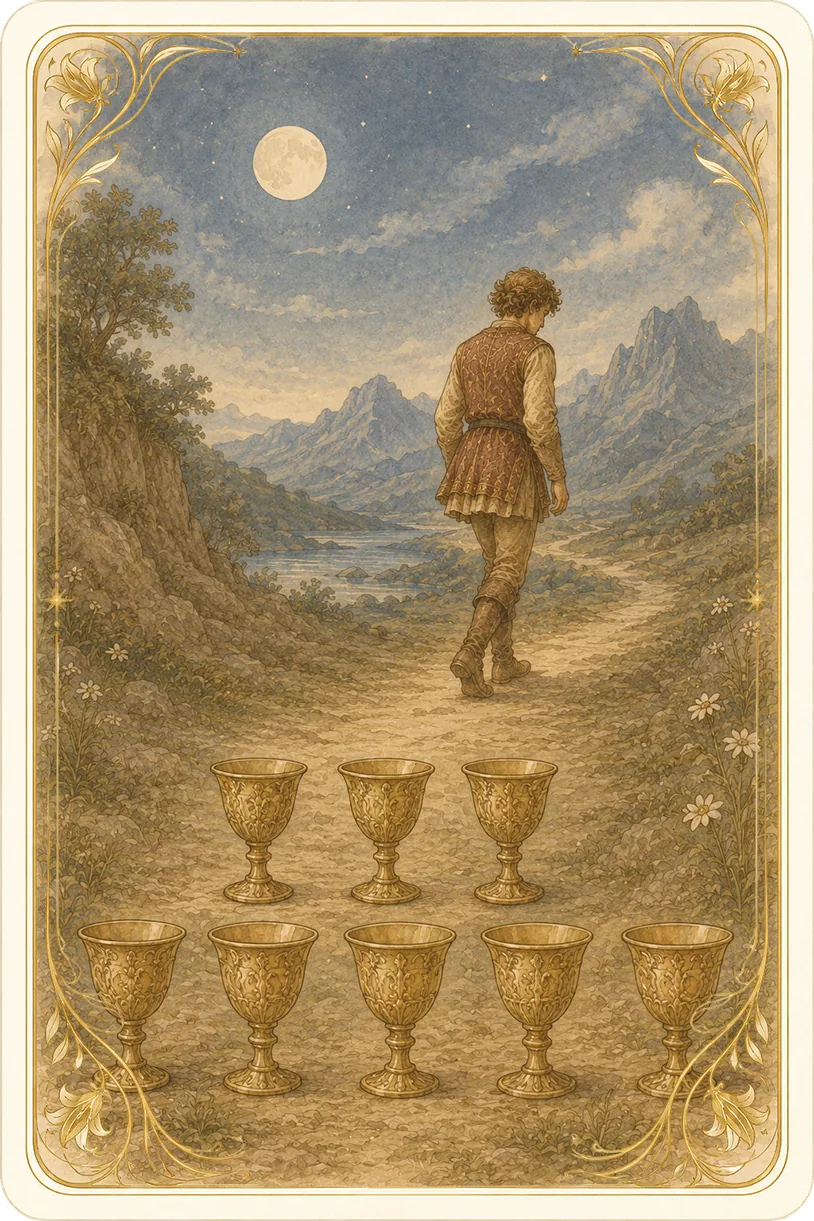
Eight of Cups
Walking away from something that still looks fine on paper. Not failure, not drama — just the honest recognition that your heart left a while ago, and the quieter search that follows it.
KeywordsLeaving, giving up, searching, clearing, emptiness, inner journey, release, decision
The Eight of Cups is walking away from something that still looks fine on paper. Not failure, not drama — the honest recognition that your heart left a while ago, and the quieter, more deliberate search that follows it.
Upright meaning
From the outside nothing is broken, and yet the sense that this is no longer your place keeps getting louder. Often the emotional departure happened months ago; what remains is making it official. The leaving in this card is deliberate rather than panicked — choosing a direction instead of fleeing one. Expect some grief anyway. Letting yourself mourn what you built makes the next stretch of road easier to walk.
Reversed meaning
You know the exit is there and you cannot make yourself take it. Time invested, people involved, and plain fondness all argue for staying a little longer. The opposite pattern appears too: a sudden dramatic departure followed quickly by regret. Count the cost of the waiting itself — attention spent on an unmade decision is not free. If you stay, at least choose a new reason for staying.
Love & relationships
Affection lingers while investment quietly withdraws. Conversations thin out, expectations fade, and there was never a fight to point at. Naming that shift honestly hurts less than pretending otherwise. This card does not push you toward a breakup; it asks what you want from the relationship now.
Work & money
The pull toward a different path grows stronger, usually driven by stalled growth rather than bad conditions. If you decide to go, finish well — handovers, documentation, goodbyes. How you leave travels with you and tends to shape what the next opportunity looks like.
Advice
Decide what you are willing to leave behind. Listing your regrets is often what makes the step possible.
What the Eight of Cups shows, and why every detail matters
A cloaked figure walks away from eight cups stacked neatly in the foreground, heading up a rocky path toward mountains. A moon with a face looks down. The cups are arranged in two rows — five and three — with a gap where a ninth might have gone. The figure leans on a staff and does not look back.
The cups are not broken. That is the detail everything rests on: they are stacked, intact, carefully made, and the figure is leaving them anyway. The gap in the arrangement says something was always missing, even when the structure looked complete. The night and the moon say this is not a decision made in the clear light of certainty. The Eight of Cups is not about escaping something bad. It is about leaving something good enough, because good enough turned out not to be the same as yours.
The Eight of Cups upright: meaning in a reading
Upright, from the outside nothing is broken — and yet the sense that this is no longer your place keeps getting louder. Often the emotional departure happened months ago; what remains is making it official, and the card appears at exactly the point where pretending has become more tiring than leaving.
The leaving in this card is deliberate rather than panicked: choosing a direction instead of fleeing one. Expect some grief anyway. The Eight of Cups does not pretend the cups were worthless, and neither should you. Letting yourself mourn what you built — the years, the people, the version of yourself who wanted this — makes the next stretch of road easier to walk than carrying it unmourned would.
The Eight of Cups reversed: what changes
Reversed, you know the exit is there and you cannot make yourself take it. Time invested, people involved, and plain fondness all argue for staying a little longer, and each argument is real. The card does not dismiss them. It asks you to count the cost of the waiting itself — attention spent on an unmade decision is not free, and it is being spent every day.
The opposite pattern appears too: a sudden, dramatic departure followed quickly by regret, because the leaving was a reaction rather than a choice. The reversed Eight of Cups has one clear piece of advice for the person who stays: at least choose a new reason for staying. The old reason has expired, and a stay that has no reason is not loyalty. It is drift.
The Eight of Cups in love and relationships
In love, affection lingers while investment quietly withdraws. Conversations thin out. Expectations fade. There was never a fight to point at, which is exactly what makes this card hard to name — nothing happened, and that is what happened. Naming the shift honestly hurts less than pretending otherwise, and it hurts both people less.
This card does not push you toward a breakup. It asks what you want from the relationship now, which is a different and more useful question. If you are asking about someone specific, the Eight of Cups suggests one of you has already started walking and the other has not yet noticed — and it asks you, gently, to check which one you are.
The Eight of Cups in work, career and money
At work, the pull toward a different path grows stronger, usually driven by stalled growth rather than bad conditions. The job is fine. The pay is fine. The people are fine. And you have stopped learning anything, which is the thing this card notices that the performance review does not.
If you decide to go, finish well: handovers, documentation, goodbyes. How you leave travels with you and tends to shape what the next opportunity looks like. With money, the Eight of Cups is the card of the sunk cost — the thing you keep because of what you already spent on it. Its counsel is that what you spent is gone either way, and the only question left is what the next year costs.
The Eight of Cups as a yes-or-no card
Asked yes or no, the Eight of Cups says yes to leaving and no to staying as you are. It is a yes for the departure you have been circling, the change you have half-made, the door you already know is there. It is a no — or a not-like-this — for continuing without a new reason. If you are asking whether to go, the card says you have been going for a while. If you are asking whether to stay, it says only if you can say why.
Frequently asked questions
What does the Eight of Cups mean?
Walking away from something that still looks fine on paper — not failure or drama, but the honest recognition that your heart left a while ago. The leaving is deliberate rather than panicked, choosing a direction instead of fleeing one, and the card expects some grief for what you built even as you go.
Does the Eight of Cups mean a breakup?
Not necessarily. In love it describes affection lingering while investment withdraws — conversations thinning, expectations fading, with no fight to point at. The card does not push toward a breakup; it asks what you want from the relationship now, and whether one of you has already started walking.
What does the Eight of Cups reversed mean?
Knowing the exit is there and being unable to take it — time invested, people, fondness all arguing for staying — or the opposite, a sudden departure followed by regret. The card asks you to count the cost of the waiting itself, and tells the one who stays to at least choose a new reason.
What does the Eight of Cups mean for a career?
The pull toward a different path, usually from stalled growth rather than bad conditions: the job is fine and you have stopped learning. If you go, finish well — handovers, documentation, goodbyes — because how you leave travels with you. What you already spent is gone either way; the question is what next year costs.
Does the Eight of Cups mean yes or no?
Yes to leaving, no to staying as you are. A yes for the departure you have been circling; a not-like-this for continuing without a new reason. If you are asking whether to go, you have been going for a while. If you are asking whether to stay, only if you can say why.
Write your question and pick three cards from the full 78. The first reading works without signing up.
Cards worth reading alongside
Tarot does not fix the future. These pages are a reference for reflecting on where you are right now.